Good work on Mulvey and Todorov Nicole! You have concisely raised the main points of each theory. You have also referenced your own work and how Todorov could be applied. Make sure you do this for the codes and conventions and the other theorists you look into.
Further steps - look further at narrative theory with Propp.
Then look back at your storyboard and start to plan in more detail. What camera angles and shots do you want? What props and scenery do you need to get in place for filming?
Thursday, 19 October 2017

Tuesday, 17 October 2017
Laura Mulvey's theory on the male gaze
LAURA MULVEY'S THEORY ON THE MALE GAZE
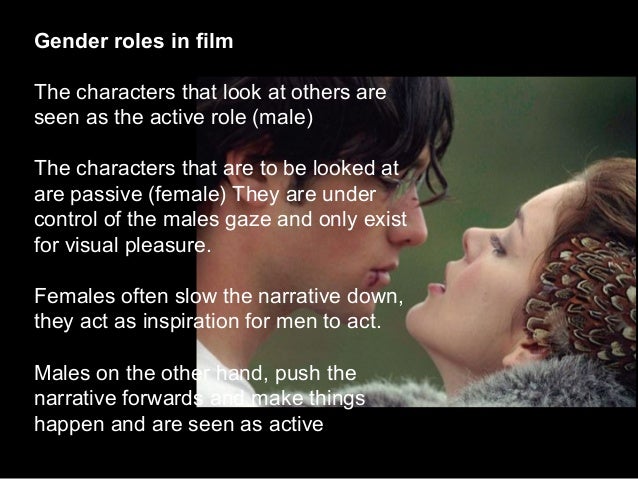
 Visual Pleasure and Narrative Cinema by Laura Mulvey was an essay which used the term Male Gaze which soon went on to become a very well know and discussed theory. In film, the male gaze occurs when the audience is put into the perspective of a heterosexual man.
this is used in both film and music videos.
This is the idea that women are often objectified, it shows how men look at women, as well as how women look at other women and themselves.
She says that the camera often lingers on the curves of the female body.
Laura Mulvey said that in the 1950-60s women were coded with "to-be-looked-at-ness" and the camera position and viewer were the "bearer of the look."
Her theory relates to my work because in film she says that the way women are portrayed is in an objectified way, this also to an extent links to the fact that women are weaker, so as I am making a horror film trailer it is significant that the main character/ victim is female, to really show her theory I could have some camera shots and angles that highlight the female characters in a more attractive way for the male audience.
Monday, 16 October 2017
TODOROV'S NARRATIVE THEORY
TODOROV'S NARRATIVE THEORY
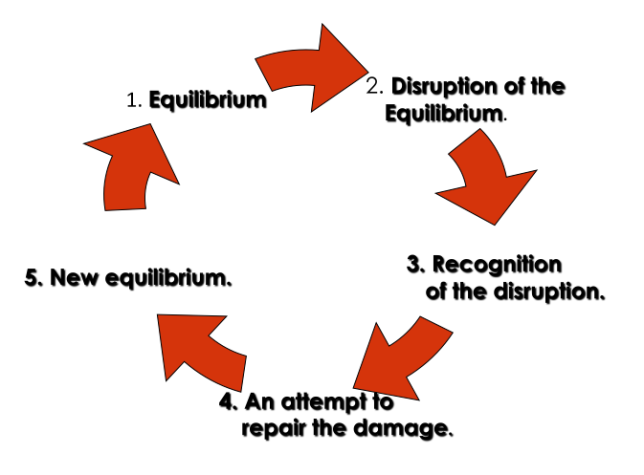
Todorov's theory suggests that all narratives follow a structure made up of 5 parts.
The three steps of traditional stories are; Everything as it should be (equilibrium), Disruption (an event happens), and finally a solution that returns everything to how it was before the disruption.
The steps of Todorov's theory are
1. A state of equilibrium (All is as it should be.)
2. Disruption of this because of an event.
3. Recognition that the disorder has happened.
4. An attempt to repair the damage.
5. A return or restoration of a new equilibrium
one film that shows these steps well is Die Hard.
Todorov's theory relates to what I am doing with a film trailer because in a film trailer there is an overlook of what is in the movie. Following the steps of this for films gives a clear plot line for films- so this is useful because it has allowed me to see how films are often structured. I can use this to help plan my trailer.
Wednesday, 11 October 2017
Plumtree
Nicole, well done for adding the analyses and codes and conventions. Now look at Laura Mulvey's theory on the male gaze and Todorov's or Propp's narrative theory and see how these might apply to your trailer. Post your findings as soon as you can.
Tuesday, 10 October 2017
Monday, 9 October 2017
Friday, 6 October 2017
Wednesday, 4 October 2017
Tuesday, 3 October 2017
Plumtree
Nicole, the work you are currently doing on the codes and conventions of horror trailers will need to be posted by tomorrow's lesson. By Friday you will need to have posted two more horror film trailer analyses to help show how the codes and conventions are being used and how you plan to conform or challenge these conventions.
Monday, 2 October 2017
JONES
Good job with the storyboard Nicole. Hopefully this has helped you to visualise your trailer more. Look back at Mr Plumtree's ideas to further your research. In particular focus on the codes and conventions not just of your film genre but of a film trailer. What do they include? What do they typically leave out? This may help you get more detail and a clearer picture for your storyboard.
Subscribe to:
Posts (Atom)